Discover the Innovations and Techniques worldwide of Casting Factory
The Casting Foundry market is going through significant transformation. Advanced materials and cutting-edge methods are redefining standard practices. Automation and robotics are simplifying operations, while sustainable techniques are ending up being important. New mold designs and additive manufacturing are supplying extraordinary opportunities. Quality control steps are likewise evolving, making certain integrity in manufacturing. As these fads proceed to shape the future of spreading, one need to take into consideration just how they will influence the sector overall.
The Duty of Advanced Products in Casting
Advanced materials play a crucial function in boosting the efficiency and top quality of casting processes. They add to improved thermal security, decreased shrinkage, and enhanced longevity of cast items. Advancements such as sophisticated porcelains and composite products offer greater resistance to thermal and mechanical anxieties, enabling the manufacturing of elaborate styles with superior surface area coatings. These materials likewise promote far better mold and core production, leading to lowered issues and improved dimensional precision.
The use of alloys with tailored properties allows for optimized performance in certain applications, such as aerospace and auto industries. As foundries adopt sophisticated products, they can accomplish higher energy effectiveness and lower waste generation, lining up with sustainability goals. The combination of these materials not only enhances production however also enhances the total competition of Foundry procedures in a quickly progressing market, noting an essential shift in traditional Casting methodologies.
Automation and Robotics in Foundry Operations
Automation and robotics are changing Foundry operations by boosting effectiveness and precision. These modern technologies enhance molding procedures, minimizing labor expenses and decreasing human mistake. Because of this, manufacturers are increasingly taking on automated systems to enhance manufacturing abilities and satisfy climbing demand.
Benefits of Automation
The assimilation of automation and robotics into Foundry operations has transformed traditional manufacturing practices, yielding significant benefits. Boosted performance ranks among the primary advantages, as automated systems operate continuously, minimizing cycle times and enhancing result. Automation enhances accuracy and uniformity in casting procedures, minimizing defects and ensuring greater high quality products. (Casting Foundry)
Price financial savings also emerge from decreased labor expenses and reduced product waste, permitting for much more reliable resource use. Safety and security is an additional crucial benefit; automation reduces the danger of human injury by dealing with hazardous jobs. In addition, real-time monitoring abilities make it possible for much better data collection and analysis, helping with educated decision-making. On the whole, the adoption of automation and robotics considerably optimizes functional effectiveness, leading to improved competition in the Foundry industry.
Robotics in Molding Procedures
How can robotics enhance molding processes in factories? Robotics significantly improves efficiency and accuracy in molding procedures. Automated systems can manage repeated tasks, such as putting patterns and putting molten steel, reducing the threat of human error and making sure consistent high quality. Furthermore, robot arms furnished with advanced sensing units assist in complex mold styles, permitting complex geometries that standard approaches struggle to attain.
Robotics can operate in unsafe settings, decreasing the need for human treatment in hazardous jobs. This not just improves employee safety and security but also enhances production rates. By incorporating robotics right into molding processes, factories can attain greater throughput, reduced cycle times, and lower operational prices, positioning themselves competitively in a developing sector landscape.
Sustainable Practices in Casting Foundries
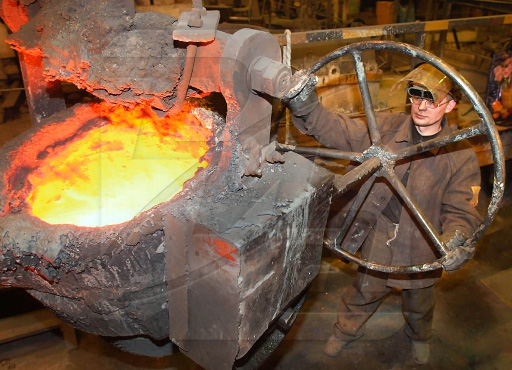
As the need for eco accountable production rises, casting shops are embracing sustainable techniques to lessen their environmental footprint. Many factories are executing recycling programs for metal scrap, decreasing waste and saving resources. By recycling products, they can significantly reduce the raw material consumption that adds to environmental degradation.
Furthermore, energy-efficient procedures are being incorporated right into procedures. Foundries are purchasing renewable resource sources, such as solar or wind power, to minimize reliance on fossil fuels. This shift not only lowers greenhouse gas discharges however also boosts cost financial savings with time.
Technologies in Mold And Mildew Style and Manufacture
Recent advancements in 3D printing innovation are transforming mold and mildew style and construction in the Casting Foundry market. Furthermore, the look at this now introduction of lasting products is boosting the ecological footprint of manufacturing processes. Accuracy mold engineering methods further add to enhanced efficiency and accuracy in the manufacturing of complicated parts.
3D Printing Innovation Advancements
Although conventional mold layout and construction techniques have actually offered the Foundry industry for years, developments in 3D printing innovation are changing these procedures. By enabling the creation of extremely intricate geometries, 3D printing enables for even more detailed layouts that were formerly difficult or cost-prohibitive. This innovation decreases preparations substantially, as prototypes and molds can be generated in an issue of hours instead than weeks (Casting Foundry). Furthermore, 3D printing helps with rapid model, permitting engineers to test and modify designs rapidly based upon feedback. The capability to create molds utilizing different materials improves flexibility and makes it possible for customized solutions for details Casting applications. 3D printing innovation is improving the landscape of mold layout and fabrication in the Casting Foundry industry.
Lasting Product Innovations
The change toward lasting practices in the Casting Foundry sector is acquiring momentum, with advancements in material selection playing an essential function. Foundries are increasingly taking on environment-friendly products, such as recycled steels and bio-based materials, to lessen environmental influence. These lasting materials not only reduce waste yet also improve the overall efficiency of the Casting process. Innovations in mold and mildew style, such as making use of 3D printing innovation for creating mold and mildews with less material, further add to sustainability efforts. Furthermore, improvements in finish innovations enable decreased emissions during casting procedures. By focusing on lasting material innovations, the Casting Foundry market is moving towards a more responsible future, aligning manufacturing exercise with environmental stewardship and source conservation.
Accuracy Mold And Mildew Engineering Techniques
As improvements in technology continue to reshape the Casting Foundry market, accuracy mold and mildew engineering strategies are becoming crucial elements in enhancing production quality and performance. These ingenious techniques leverage computer-aided layout (CAD) and computer system mathematical control (CNC) machining to develop molds with outstanding precision. Strategies such as additive production permit intricate geometries that traditional approaches can not accomplish, significantly minimizing lead times and material waste. Furthermore, the combination of simulation software assists in forecasting mold actions during spreading, allowing the optimization of layouts before physical manufacturing. This positive strategy not only boosts the overall yield but additionally guarantees that mold and mildews can be tailored to satisfy details application needs, paving the method for even more advanced and flexible Casting solutions.
Additive Production: A Game Changer for Casting
While conventional Casting methods have long been the foundation of production, additive production is rapidly transforming the landscape of casting shops. This innovative strategy, frequently described as 3D find out here now printing, enables the production of intricate geometries that were previously unattainable with conventional methods. By making use of digital layouts, foundries can create molds and cores with accuracy and rate, substantially minimizing lead times and product waste.
Additive production additionally helps with the production of customized components, enabling producers to react quickly to specific client requirements, thereby boosting competition. Additionally, the combination of additive procedures right into Foundry procedures can improve process, boosting total effectiveness. As the industry accepts these innovations, it is positioned to redefine the future of casting, using brand-new chances for creative thinking and flexibility. Additive production stands as a critical advancement, improving exactly how foundries approach design and production in a swiftly evolving market.
Quality Assurance Techniques in Modern Foundries
Quality control techniques in modern-day shops are vital for making certain that cast products satisfy stringent sector standards and customer specs. These strategies include a selection of techniques, consisting of statistical procedure control (copyright), which keeps track of manufacturing procedures to remove and determine variability. Non-destructive testing (NDT) approaches, such as ultrasonic screening and X-ray examination, are utilized to identify inner defects without damaging the item. Furthermore, the application of automated evaluation systems boosts both precision and efficiency, enabling real-time high quality analyses. Material traceability is an additional important part, ensuring that each set of resources can be tracked throughout the manufacturing process. Modern-day factories significantly utilize computer-aided style (CAD) and simulation software application to anticipate potential problems prior to spreading, helping with positive top quality management. By integrating these sophisticated quality assurance strategies, shops can considerably reduce waste, boost product integrity, and keep affordable advantage out there.
The Future of Casting: Patterns and Forecasts

The trend toward sustainable techniques is obtaining energy, with foundries progressively taking on eco-friendly products and processes. This change not just addresses ecological concerns however likewise lines up with customer demand for greener items.
In addition, the increase of additive production is expected to revolutionize standard Casting approaches, enabling for extra complex layouts and lowered material waste.
As these trends materialize, the Casting sector is most likely to experience substantial changes in manufacturing methods, market needs, and labor force demands. Companies that accept these changes will be well-positioned to prosper in a progressively competitive landscape.
Regularly Asked Inquiries
What Are the Usual Kinds Of Casting Procedures Made Use Of Today?
The common kinds of casting processes made use of today consist of sand casting, financial investment casting, die casting, and centrifugal casting. Each method differs in product, intricacy, and application, accommodating varied industrial and manufacturing needs.
How Does Casting Compare to Other Manufacturing Techniques?
Casting, contrasted to other manufacturing methods, uses benefits like intricate form production and material performance. It may include much longer lead times and higher initial costs, making it less suitable for quick manufacturing compared to approaches like machining.
What Industries Primarily Rely Upon Casting Foundries?
Industries such as vehicle, building and construction, machinery, and aerospace heavily rely upon casting shops. These industries utilize casting for generating complex steel elements, ensuring durability and accuracy in their products, which are necessary for operational performance.
What Are the Common Safety Procedures in Casting Foundries?
Typical safety actions in casting factories consist of individual protective devices, correct ventilation, normal equipment maintenance, why not find out more safety and security training, and emergency action protocols. These methods aid reduce threats related to high temperature levels, harmful products, and heavy machinery procedures.
How Can I Beginning a Profession in Casting Foundry Procedures?
To start a career in casting Foundry operations, one need to go after relevant education and learning, look for apprenticeships, gain hands-on experience, and acquaint themselves with safety procedures and equipment used in the Foundry market to boost employability.
Recent innovations in 3D printing technology are reinventing mold and mildew design and manufacture in the Casting Foundry sector. The shift toward sustainable practices in the Casting Foundry industry is acquiring momentum, with technologies in product option playing a pivotal role. As advancements in innovation continue to reshape the Casting Foundry industry, accuracy mold and mildew design methods are emerging as important elements in improving production quality and efficiency. While typical Casting techniques have actually long been the backbone of manufacturing, additive manufacturing is swiftly transforming the landscape of casting foundries. Contemporary factories increasingly utilize computer-aided design (CAD) and simulation software application to predict potential defects prior to casting, helping with proactive top quality administration.
Comments on “Why the Automotive and Aviation Fields Depend on Casting Foundry Services”